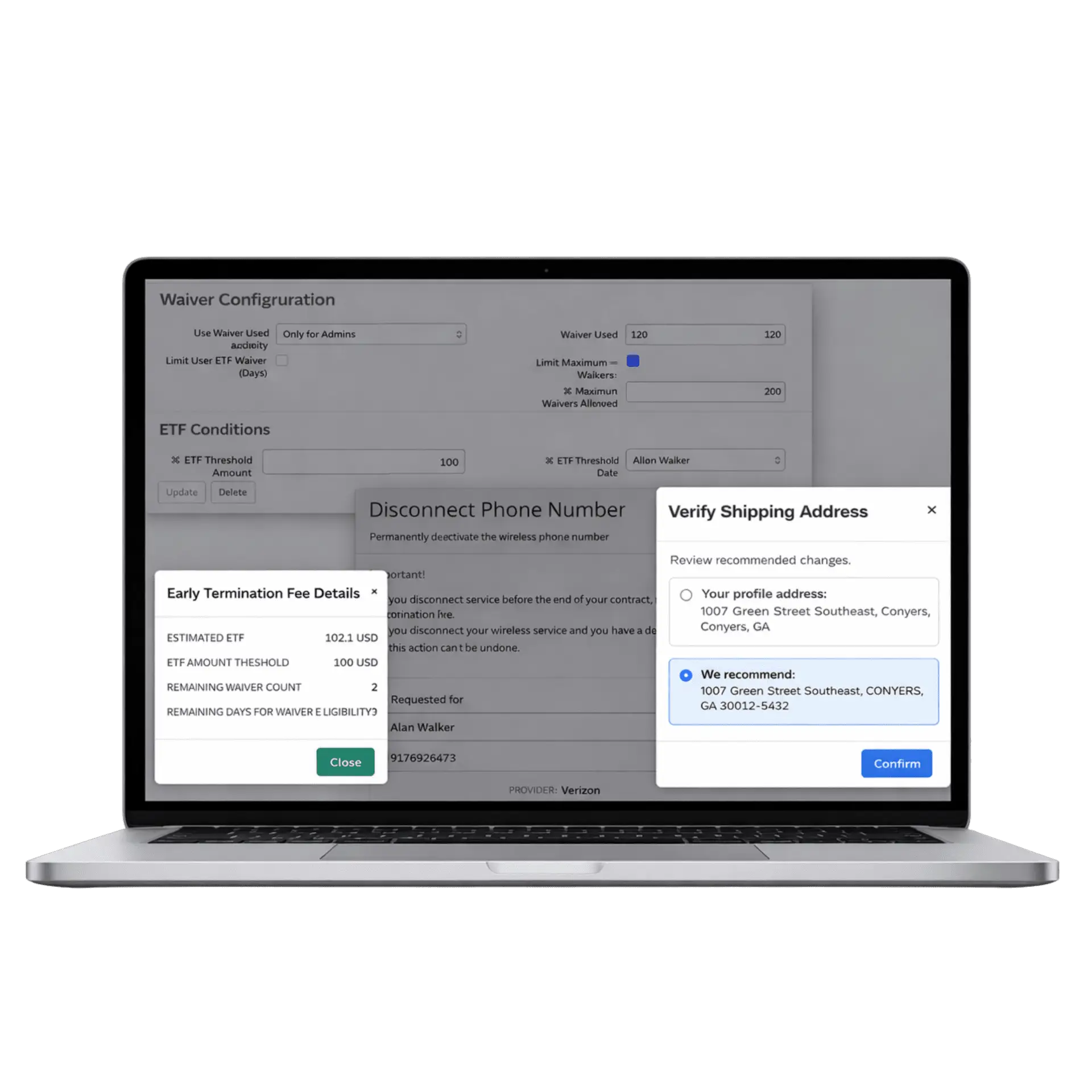
Release 26.10 advances automation across contract management, mobile fulfillment, and fixed procurement workflows. By reducing duplicate requests, strengthening data quality rules, expanding API automation, and migrating additional processes to Flow Designer, this release helps teams move work forward faster — with fewer manual checkpoints and less rework.
Foundation
Contract Management
Contract Management has been expanded and redesigned to strengthen oversight across the telecom contract lifecycle. The module now supports complex, multi-agreement structures per provider—including master agreements, SLAs, and amendments—with independent tracking of terms, renewals, and compliance obligations. A modernized UI improves clarity and navigation, while proactive health alerts notify stakeholders of upcoming risks or deadlines.
Why it matters: Stronger contract governance reduces renewal risk, improves compliance visibility, and provides tighter control over telecom spend.
Dispute Management
Dispute Management now centralizes provider communications within each dispute record, creating a complete and auditable history of negotiations and updates. An improved workspace enhances usability and lifecycle visibility, and savings tracking provides measurable insight into recovered amounts.
Why it matters: Centralized tracking increases accountability, speeds resolution, and gives finance teams clearer insight into dispute-driven savings.
Reporting Enhancements
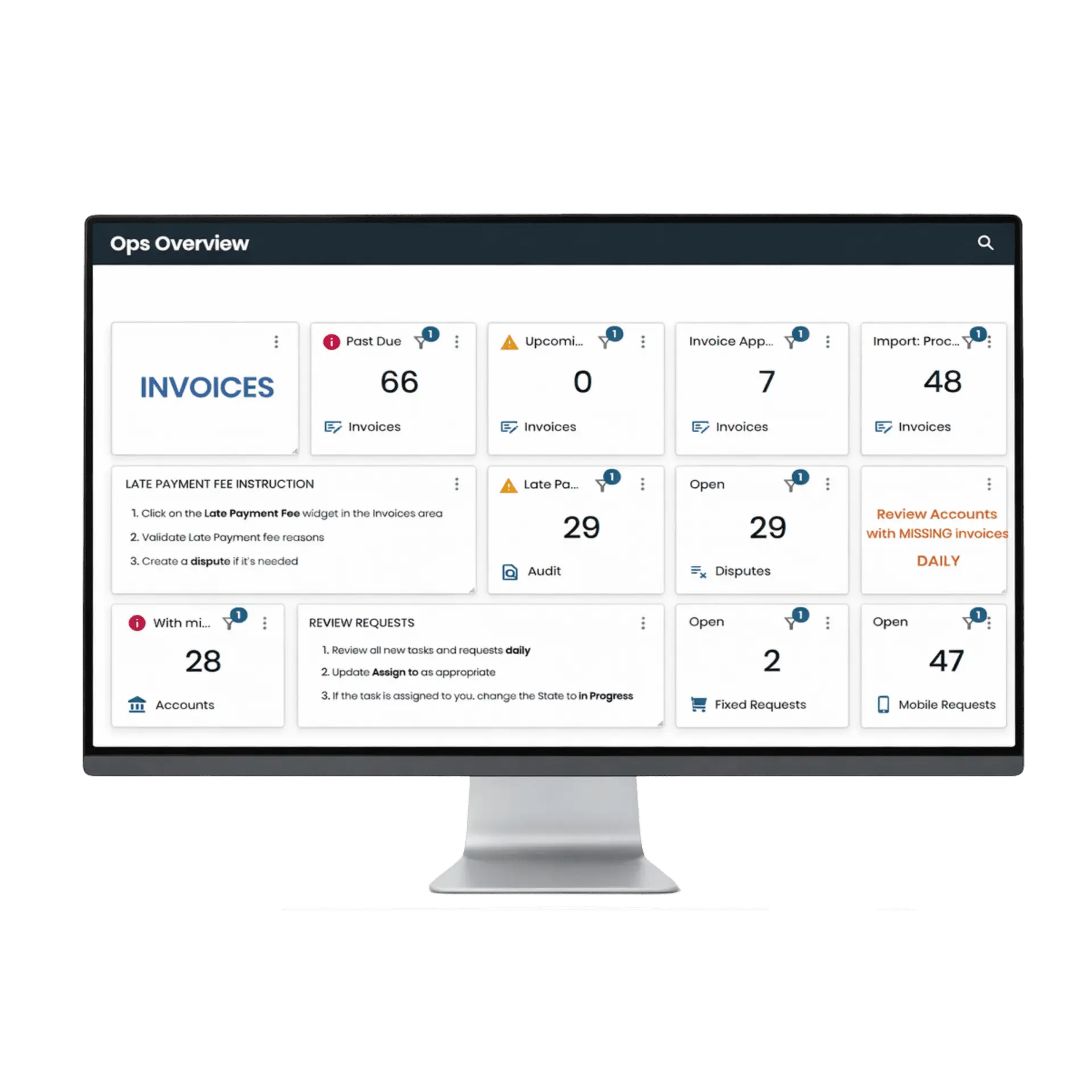
Reporting has been expanded across Home page widgets, OPS Overview, and Savings dashboards for more accurate and flexible analysis. Equipment charges can be excluded from Average Cost per Service calculations, quarterly trend logic has been refined, and dashboards now support filtering and custom notes. A new Annual Savings report and expanded filtering provide deeper financial insight.
Why it matters: Improved reporting accuracy reduces spreadsheet reliance and supports better operational and financial decision-making.
Bill Pay Enhancements
Bill Pay synchronization between Brightfin and external payment operators has been strengthened to reduce mismatches and manual reconciliation. Additional controls help identify and prevent overpaid invoices.
Why it matters: Improved synchronization increases financial accuracy and reduces the risk of revenue leakage.
Account Management
Account Management now preserves the action date and user for Deactivation and Exclusion events. New audit rules alert teams when accounts are nearing or past expiration.
Why it matters: Enhanced traceability improves audit readiness and reduces unintended access lapses.
Notification Framework – Reminders
Reminders are now configurable by frequency and count, with logging for visibility and audit purposes.
Why it matters: Flexible reminders prevent stalled approvals and keep time-sensitive workflows moving.
My Assets and Services Portal
The portal now offers clearer cost visibility with improved charge-type reporting, drill-down access to detailed charges, and a new Cost History by Charge Types report. Cost Summary visualizations have also been refreshed.
Why it matters: Greater cost transparency empowers end users and reduces support inquiries tied to billing confusion.
Import Framework Enhancements
The Import Framework now supports CSV files without header rows, enabling easier integration of minimally formatted external data through configurable mapping.
Why it matters: Increased import flexibility reduces manual data preparation and simplifies system integration.
Portal Configuration & Fixes
Organizations can now set either Service Portal or Employee Center as the default user destination. Additionally, Expected Invoice Date now displays correctly for negative time zones.
Why it matters: Improved routing supports enterprise portal strategies, and corrected date handling ensures accurate invoice visibility across global instances.
Smart Disconnect with ETF Policy Management (Verizon)
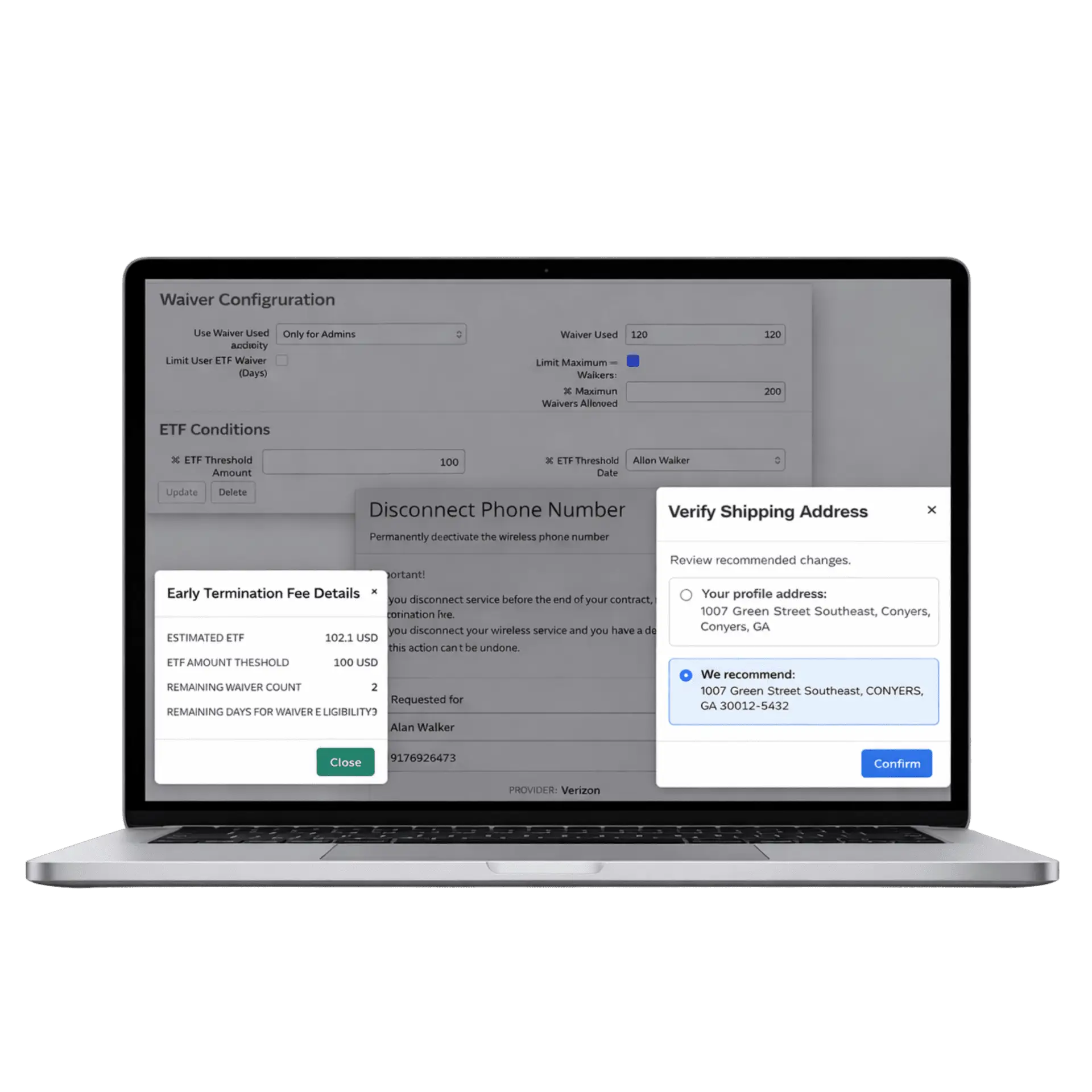
Organizations can apply client-specific rules to evaluate and manage Early Termination Fees during line disconnects. ETF amounts, thresholds, and waiver limits are visible in the Service Portal, and disconnects can be automatically approved, blocked, or waived based on policy.
Why it matters: Reduces unexpected carrier charges, minimizes escalations, accelerates compliant disconnects, and strengthens governance.
USA Address Validation
USA address validation now checks structure and required fields before submission across Service Portal provider actions, preventing formatting errors and reducing carrier API failures.
Why it matters: Increases first-pass order success and shortens fulfillment cycles.
Carrier API Integration Updates
Carrier API automation now supports roaming scheduling for Verizon and AT&T, extended contract term ordering (2.5- and 3-year), and 12-digit ICCID validation for Telstra AU.
Why it matters: Improves operational efficiency, reduces manual carrier interactions, and accelerates fulfillment.
UEM Integration Updates
UEM synchronization now supports OAuth 2.0 authentication for enhanced security and multi-tenant synchronization within the same provider domain.
Why it matters: Strengthens data security and supports complex enterprise device environments.
Device Management & Operational Improvements
New data quality rules detect incomplete or duplicate IMEI and serial records. Devices disconnected as lost or stolen now update to the correct status. Duplicate device orders are prevented, task visibility is improved, upgrade permissions expanded, stockroom notifications enhanced, and feature management made more flexible.
Why it matters: Cleaner data reduces billing and fulfillment issues, lowers operational overhead, and improves lifecycle accuracy.
Workflow Migration & Fixes
Mobile procurement workflows have been migrated to Flow Designer. Additional fixes improve UI clarity and resolve area code lookup and shipping selection issues.
Why it matters: Enhances long-term maintainability and improves reliability in day-to-day operations.
Rate Change Management Flow
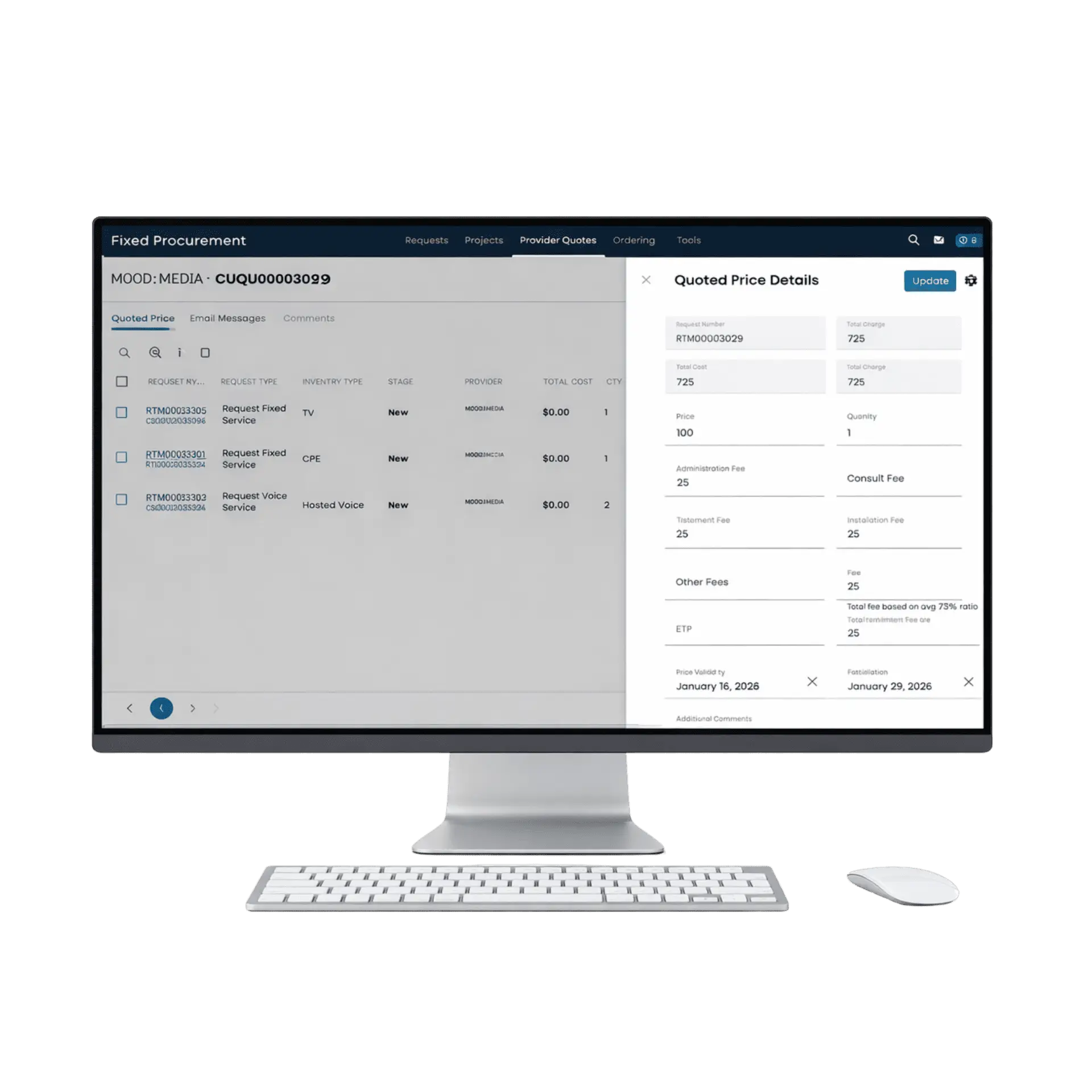
A new Rate Change Management Flow standardizes quoting across all fixed procurement processes. Teams can quote circuit rates before upgrades or moves, confirm ETFs before disconnects, and validate approved rates against post-completion charges.
Why it matters: Improves pricing accuracy, strengthens financial control, and reduces billing surprises and disputes.
Contracted Rate Plans for New Fixed Orders
Pre-approved Service Plans based on signed agreements can now be reused during new circuit requests. Teams can select existing agreement plans and skip quoting for standard scenarios while retaining flexibility to compare alternatives.
Why it matters: Accelerates ordering, enforces contract compliance, and reduces repetitive quoting effort.
Configurable Telecom Project Tasks Framework
A new Integrated Task Framework allows organizations to create custom Telecom Project Tasks across all fixed procurement workflows, triggered by configurable conditions—without custom code.
Why it matters: Increases operational flexibility, reduces development dependency, and supports scalable process design.
Provider Quote Approval & Automation
Provider quote approvals now support configurable multi-step workflows. Quote creation can be automated when a preferred provider is selected, bulk quotes can be generated across locations, and email notifications can be skipped when quotes are managed through alternate channels. Technology Portal actions have also been enhanced.
Why it matters: Improves compliance and spend control, reduces manual effort, and speeds multi-site procurement.
Additional Improvements & Fixes
Fixed Service requests now include expanded required fields to ensure complete circuit data. Workflows have been migrated to Flow Designer, and several issues related to exports, approvals, assignments, and fulfillment notes have been resolved.
Why it matters: Reduces provisioning errors, improves reliability, and supports long-term scalability.